Your First Gallery Visit: A Looking Plan for One Room
A first gallery visit feels less rushed with a simple room plan: choose a comfortable route, use labels selectively, and leave with one useful note.
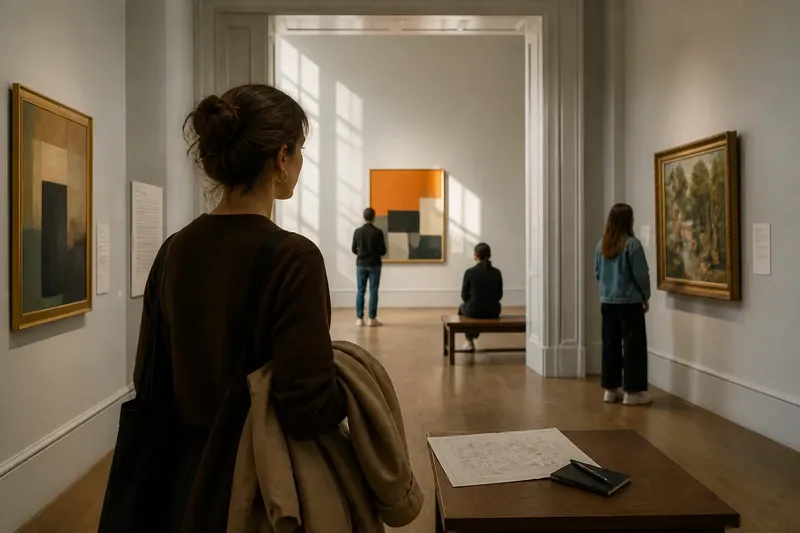
You pause just inside a gallery room, coat over your arm, while visitors drift toward different walls. For a first gallery visit, a simple room plan can help you settle in without turning the visit into an assignment.
Start by deciding what would make the visit feel manageable: seeing one room, finding a favorite work, or simply getting comfortable in the space. You can change that aim at any point. The plan is there to support your visit, not to set a quota.
Choose a route that suits the room
From a spot clear of the doorway, notice the entrances, benches, and open paths. Some rooms invite a loop; others have a single wall that naturally draws visitors forward. Follow the route that lets you move without blocking others, and leave crowded areas for later.
Check the floor map or gallery directory if you are unsure where to go next. If a room has several exits, pick one that leads toward the next space you want to visit. You can also stay put when the room feels inviting. There is no need to cover every gallery in order.
Make a small practical choice before settling in: keep your bag close, silence your phone if appropriate, and look for posted rules about food, photography, and touching. If you need a seat, choose a bench that does not obstruct a work or passage.
A clear path makes it easier to give the room your attention.
Use labels as optional context
Wall labels can tell you a work’s title, medium, date, or other background. Read one when it answers something you want to know, or when a term or material is unfamiliar. You do not have to read every label to have a worthwhile visit.
If a label includes unfamiliar language, take the part that is useful and leave the rest for another time. A gallery guide or audio tour may offer more context, but it is fine to skip those too. Choose the amount of information that helps you stay engaged.
Say you have ten minutes before meeting a friend and the room contains several works. You decide to follow the open path, pause at two pieces, and read the label beside the one whose materials you do not recognize. You leave with a clearer sense of what that label added, while still making your meeting on time.
Use the label that answers your question, then return to the room.
Keep the visit comfortable and considerate
Gallery etiquette is usually easier when you follow signs and leave space for other people. Step aside before stopping to read, keep voices low enough not to carry across the room, and avoid leaning on display cases or barriers. If you are visiting with someone, agree on a meeting point in case you separate.
Ask staff if you are uncertain about access, a seating option, or a gallery rule. They can explain local policies, including whether photography is allowed. Rules may differ between rooms or works, so check the signs rather than assuming.
If the room becomes busy, move to a quieter space or take a short break. A visit can be brief and still feel complete.
What should you plan for a first gallery visit?
Do I need to see every room?
No. Choose a room or route that fits your time and energy, and leave the rest for another visit. A smaller plan can make it easier to enjoy the space you are in.
Should I book a tour?
Check the institution’s visitor information for tours, admission details, and any booking requirements. A tour can provide structure, while exploring on your own lets you set the pace.
What should I bring?
Bring only what you are comfortable carrying, and check the institution’s bag policy before you go. A small notebook can be useful if you like keeping a record, but it is optional.
Can I take photographs?
Follow posted signs and ask a staff member if the rule is unclear. Some spaces or works may have different restrictions, so check before taking a picture.
Leave with one practical note
Before you leave, check the directory for a room or exhibition you might want to visit next time. If a map helped, keep it; if you used an audio guide, note the title of a stop you want to remember. You do not need to record a verdict about what the art meant.
For a first gallery visit, the useful measure is whether your plan helped you feel at ease and move through the space on your own terms. The phrase “first gallery visit” can bring up expectations of knowing what to do; a comfortable route, one helpful label, and a clear next step are enough to make the visit your own.