Before Recordings, How Music Was Shared at Home
Before recordings, music shared at home brought players, singers, and listeners together; learn how sheet music and memory helped songs travel between rooms.
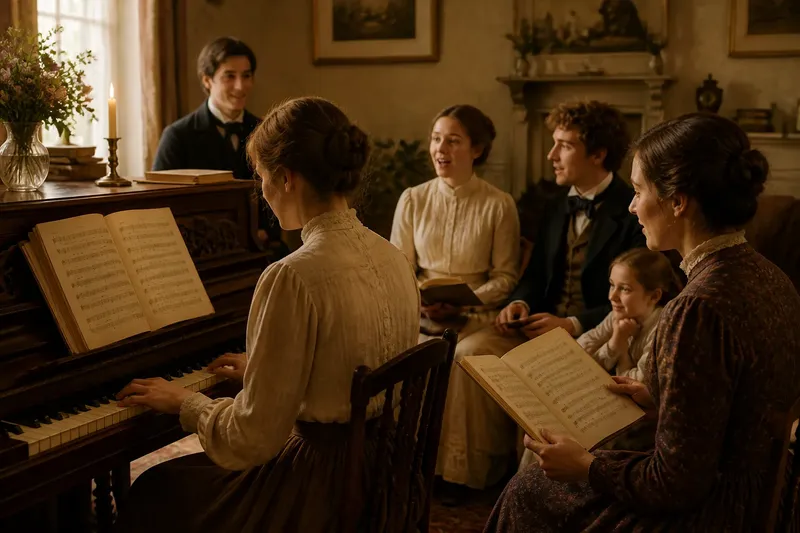
A piano sounds from the parlor while someone searches a music book for the next song. Before recordings were widely available in everyday household life, playing and singing at home could turn a visit into a shared musical occasion. The details varied by period, place, resources, and family; this imagined gathering offers one modest way to consider what might happen.
Home music depended on the people and room
Imagine a fictional household with a piano, a printed songbook, and a few neighbors visiting for the evening. One family member has practiced a piece, another knows a familiar melody, and guests pull their chairs closer. The instrument can lead a song, support a singer, or provide music for dancing.
Not every household had a piano or sheet music. People could sing without an instrument, gather around a visitor who brought one, or listen while a practiced player performed. What happened depended on the available instruments, the players’ abilities, and the guests’ preferences.
The room also shaped the event. Guests could talk between pieces, request a tune, or take a turn. Unlike a recording, a live performance changed with the people present: a singer might set the pace, a player might miss a note, and listeners might join in.
Arrange the room around the people who want to listen or take part.
Sheet music helped songs travel between homes
In the imagined gathering, the practiced player uses printed music to begin a song. A guest recognizes the melody and joins in. The page gives the player a guide, while the familiar tune gives other people a way into the music, whether or not they can read notation.
Printed music allowed songs and instrumental pieces to circulate beyond the people who first composed or performed them. A household might keep music in a book and return to it. But a printed arrangement did not preserve one performance exactly: each rendition depended on its players, instruments, and setting.
Memory offered another route. Someone could carry a melody away, teach it to another person, or adapt it for a different voice or instrument. The song could persist while its performance changed.
Keep the distinction in mind: a page can preserve notes, but people make each performance anew.
Participation gave a gathering its social shape
Guests did not need equal skill to share music. One person might perform a practiced piece, another sing a refrain, and someone else listen. A child might tap along, then quiet down as the next song begins. These roles could shift during the evening.
Playing for visitors could show that someone had learned an instrument, while singing together could be more informal. The meaning depended on who was invited, who was asked to perform, and who felt welcome to join. A gathering could be hospitable and enjoyable while still reflecting expectations about training and participation.
Say the fictional player loses her place halfway through a song. A neighbor recognizes the melody and sings the next line; the player finds her spot and continues. The observable result is a song carried on by two people, not a flawless performance. If no guest knows the tune, the player can choose a familiar song instead or let the piece end.
Notice who starts the music and who gets an opening to join.
How could someone join a song they did not know?
Could a guest join without reading music?
Yes. A guest could listen for a repeated refrain, learn by hearing, or follow the lead of a singer. Notation was one way to participate, not the only one.
Did every household own a piano?
No. Access to instruments and printed music varied. People could sing without accompaniment or gather around music brought by a visitor.
Did home music require a skilled performer?
Some pieces called for practice, but a gathering could also include simpler songs and group singing. Guests could listen or join a refrain without playing an instrument.
How could a song move beyond one gathering?
A person might remember a melody, teach it to someone else, or use printed music to play it again. As new singers and players took it up, the tune’s performance could change.
A song could outlast the visit without repeating the performance
When the imagined evening ends, one neighbor remembers the melody and another asks to borrow the songbook. The gathering is over, but a tune may travel through memory, teaching, or a printed page. None of those carries every voice, pause, or mistake from the room.
That distinction helps explain home music before recordings became commonplace in many households: songs could be repeated, but each live performance belonged to its occasion. When thinking about music shared at home, notice not only what was played but who could join, listen, or carry the tune onward.